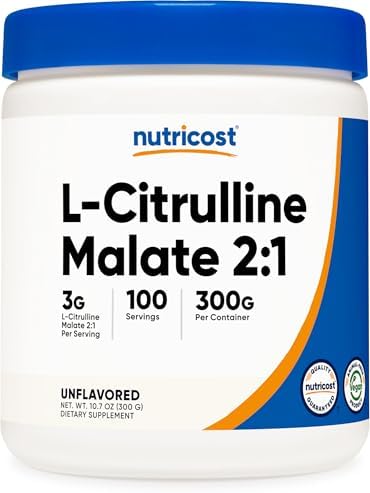
- 3 Grams of L-Citrulline Malate Per Serving (98 Servings)
- More Potent and Less Sour than 1:1 Ratio Versions
- Non-GMO & Gluten Free
(As an Amazon Associate, I earn from qualifying purchases)
Introduction to L-Citrulline Malate
L-Citrulline Malate is a compound that has gained considerable attention in both the fitness and health communities. Combining the amino acid citrulline and malate, an organic salt derived from apples, this supplement is often utilized for its potential benefits related to athletic performance and recovery. The compound plays a crucial role in the body’s nitric oxide production, which helps with vascular function and blood flow, making it particularly appealing to athletes and fitness enthusiasts alike.
As individuals seek ways to enhance their workout efficiency, L-Citrulline Malate has emerged as a popular topic among sports nutritionists and health advocates. It has been researched for its ability to improve exercise performance, specifically in activities that involve endurance and high-intensity training. The interest in this compound is largely due to its ability to potentially alleviate muscle fatigue and soreness, thereby promoting faster recovery following strenuous activities. This aspect is particularly significant for athletes engaged in intense training regimens, as even slight improvements in recovery time can lead to enhanced performance in subsequent workouts.
Moreover, L-Citrulline Malate is frequently highlighted for its favorable safety profile and ease of incorporation into various dietary routines, whether taken as a standalone supplement or as part of pre-workout formulations. The increasing prevalence of this supplement in health and fitness circles reflects a broader trend towards personalized nutrition strategies aimed at optimizing health and athletic capabilities. As the research continues to evolve, understanding the implications of L-Citrulline Malate in both athletic performance and overall wellness remains essential for anyone considering its inclusion in their regimen.
What is L-Citrulline Malate?
L-Citrulline Malate is a compound that merges the non-essential amino acid L-Citrulline with Malate, a derivative of apple acid prominent in the Krebs cycle. This unique combination is essential for a variety of physiological functions, primarily due to its role in the production of energy and the buffering of lactic acid in muscles during exercise.
The structure of L-Citrulline consists of a carbon backbone, nitrogen atoms, and various functional groups, which contribute to its activity in the human body. When combined with Malate, which contributes to energy metabolism, the resulting compound enhances performance and recovery during physical activities. In particular, L-Citrulline acts as a precursor to another amino acid, Arginine, which is crucial for the synthesis of nitric oxide—a key player in vasodilation and blood flow regulation.
Furthermore, Malate is integrally involved in the energetic reactions that take place within the mitochondria, improving energy production rates. Hence, the synergy between L-Citrulline and Malate creates a powerful supplement that helps in attenuating muscle soreness and fatigue while enhancing overall athletic performance. The compound has gained prominence in recent years within the fitness and nutritional sectors, as more individuals seek to leverage its numerous benefits.
In addition, research has highlighted that L-Citrulline Malate may assist in reducing muscle fatigue and improving exercise capacity, especially in high-intensity and endurance-related activities. By understanding the biochemical composition and the interplay between L-Citrulline and Malate, users can better appreciate its role and potential in optimizing physical performance and recovery.
The Role of L-Citrulline Malate in the Body
L-Citrulline malate, a compound formed from the amino acid L-citrulline and malate, plays a pivotal role in various physiological processes within the body. One of its most significant functions is the production of nitric oxide, a potent vasodilator. Nitric oxide enhances blood flow by relaxing the blood vessels, thereby facilitating the delivery of essential nutrients and oxygen to tissues during physical activity. This increase in blood circulation not only supports cardiovascular health but also substantially impacts athletic performance.
In addition to its vasodilatory effects, L-citrulline malate is intricately linked to energy metabolism. The malate component of the compound is involved in the Krebs cycle, a crucial biochemical pathway that generates adenosine triphosphate (ATP), the body’s primary energy currency. When supplemented, L-citrulline malate can help mitigate fatigue and boost endurance by promoting efficient energy production. This translates to improved exercise capacity, allowing athletes to train harder and longer while potentially reducing the perception of fatigue.
Moreover, L-citrulline malate has been shown to enhance recovery following intense physical exertion. By improving blood flow and nutrient delivery, this compound aids in the removal of metabolic waste products like ammonia and lactic acid, which can accumulate during exercise. Consequently, athletes may experience reduced muscle soreness and quicker recovery times when using L-citrulline malate as part of their supplementation regimen.
In essence, L-citrulline malate serves multiple roles in promoting better blood flow, enhancing energy metabolism, and aiding recovery. These functions collectively contribute to improved athletic performance, making it a valuable addition to the repertoire of supplements for those engaged in rigorous physical training.
Origin and History of L-Citrulline Malate
L-Citrulline, a non-essential amino acid, was first identified in the late 19th century, specifically in 1914, by the scientist Frederick G. W. K. R. T. A. Meyer. The compound was initially isolated from watermelon (Citrullus lanatus), a fruit noted for its high water content and refreshing taste. This discovery marked the beginning of a path toward understanding the nutritional and medicinal potential of L-Citrulline, prompting further research into its benefits. Historically, watermelon has been utilized in traditional medicine to alleviate various ailments, suggesting that societies recognized the therapeutic properties of this fruit long before the identification of citrulline itself.
In the subsequent decades, research unveiled L-Citrulline’s role in the urea cycle, where it assists in the detoxification of ammonia in the body. This biochemical function sparked interest among health professionals, particularly in sports nutrition. Scientific studies began to support the hypothesis that L-Citrulline could improve athletic performance. In the early 2000s, research indicated that L-Citrulline supplementation could enhance blood flow, reduce muscle soreness, and improve recovery times, paving the way for its popularity among athletes and fitness enthusiasts.
As more studies emerged, particularly in the fields of exercise physiology and nutrition, L-Citrulline Malate— a compound formed by combining L-Citrulline with malic acid— became increasingly prominent. This combination has been shown to amplify the beneficial effects of citrulline by enhancing energy production during exercise and improving endurance. Noteworthy clinical trials have demonstrated that regular supplementation of L-Citrulline Malate can lead to improved exercise performance and reduced fatigue. These findings solidified L-Citrulline Malate’s status as a desirable supplement in the athletic community, marking its evolution from a simple amino acid to a key player in sports nutrition. Today, L-Citrulline Malate is widely recognized for its numerous health benefits, establishing itself as a staple in dietary supplementation for physical performance and overall well-being.
Benefits of L-Citrulline Malate
L-Citrulline Malate is increasingly recognized for its numerous health and fitness benefits, particularly in the realm of athletic performance and recovery. One of the most notable advantages of this compound is its ability to enhance athletic performance. By promoting increased levels of nitric oxide in the body, L-Citrulline Malate can lead to improved blood flow and, consequently, better oxygen and nutrient delivery to muscles during exercise. This heightened circulation is crucial for athletes seeking to boost their performance and push their limits.
Additionally, studies have shown that L-Citrulline Malate can significantly improve endurance. A research paper published in the “Journal of Strength and Conditioning Research” highlighted that subjects who supplemented with L-Citrulline Malate experienced enhanced aerobic performance, allowing them to exercise longer before reaching fatigue. This improvement in endurance can be particularly beneficial for both endurance athletes and those engaging in high-intensity interval training.
Another critical benefit of L-Citrulline Malate is its efficacy in reducing muscle soreness post-exercise. A systematic review indicated that individuals who took L-Citrulline Malate reported less muscle soreness and had better overall recovery compared to those who did not. This suggests that the compound may play a role in accelerating the recovery process following strenuous physical activity.
Moreover, L-Citrulline Malate has been associated with improved recovery times. By alleviating muscle soreness and promoting nutrient delivery, athletes can return to training more swiftly and effectively, thereby maintaining their workout routines and achieving their fitness goals. Overall, the compelling evidence supporting the benefits of L-Citrulline Malate makes it a valuable addition to the regimes of serious athletes and fitness enthusiasts alike, affirming its role in promoting enhanced performance, endurance, and recovery.
How to Use L-Citrulline Malate Effectively
Incorporating L-Citrulline Malate into your dietary or supplement regimen requires careful consideration of dosage, timing, and form. The optimal dosage of L-Citrulline Malate generally falls within the range of 6 to 8 grams per day for most individuals. This amount is commonly suggested for enhancing athletic performance and improving recovery. For beginners, it may be prudent to start at the lower end of this range and gradually increase as tolerated, monitoring for any adverse effects.
Timing of L-Citrulline Malate supplementation can significantly influence its benefits. For those involved in regular physical activity, taking L-Citrulline Malate approximately 30 to 60 minutes before a workout is advisable. This timing allows for peak blood concentration to occur during physical exertion, optimizing performance and potentially delaying fatigue. Conversely, ingesting L-Citrulline Malate post-workout can aid in recovery by enhancing blood flow and nutrient delivery to sore muscles.
When it comes to the form of L-Citrulline Malate, both powder and capsules are widely available. Powdered forms can be more easily adjusted regarding dosage and are often preferred for mixing with pre-workout drinks. Moreover, many find that the powdered form has a quicker onset of action as it may be absorbed more rapidly. On the other hand, capsules provide convenience and portability, which can be beneficial for those who are on the go.
Another consideration is whether to cycle L-Citrulline Malate. Cycling may be beneficial, allowing the body to maintain sensitivity to the supplement. Users often adopt a regimen of using this supplement for several weeks, followed by a short break to assess its effects on their performance and overall well-being. In conclusion, understanding the nuances of dosage, timing, and form can significantly enhance the effectiveness of L-Citrulline Malate in your supplementation routine.
Potential Downsides and Side Effects of L-Citrulline Malate
L-Citrulline Malate is widely recognized for its potential benefits in enhancing athletic performance and promoting cardiovascular health. However, like any supplement, it is essential to consider potential downsides and side effects before incorporating it into one’s regimen. One possible concern is the risk of gastrointestinal discomfort. Some users may experience symptoms such as bloating, diarrhea, or stomach cramps, particularly when consuming high doses. It is advisable to start with lower doses and gradually increase them to assess tolerance.
Moreover, individuals with certain medical conditions should exercise caution when considering L-Citrulline Malate supplementation. Those with low blood pressure or conditions resulting in hypotension should be particularly careful, as this supplement may enhance blood flow, potentially leading to further decreases in blood pressure. Additionally, anyone with a history of allergies to citrulline or other amino acids should avoid using this compound.
It is also critical to consider interactions with other supplements or medications. L-Citrulline Malate may enhance the effects of nitrates or medications used for cardiovascular purposes, possibly increasing the risk of side effects. This interaction underscores the importance of consulting with a healthcare provider before initiating supplementation, especially for individuals currently taking medications or those with underlying health issues.
In summary, while L-Citrulline Malate can offer several benefits, potential side effects such as gastrointestinal discomfort, blood pressure concerns, and interactions with medications warrant careful consideration. Engaging the guidance of a healthcare professional can help individuals navigate these challenges effectively, ensuring safe and informed usage of this supplement.
L-Citrulline Malate vs. Other Supplements
L-Citrulline Malate is often compared to several other popular performance-enhancing supplements, including L-Arginine, Beta-Alanine, and pure Citrulline. Understanding their similarities and differences in terms of effectiveness, safety, and specific use cases is essential for athletes and fitness enthusiasts alike.
L-Arginine, a direct precursor to nitric oxide, has traditionally been favored for its potential to enhance blood flow and improve exercise performance. However, studies have indicated that L-Citrulline Malate may actually be more effective in increasing systemic nitric oxide levels and improving endurance. This discrepancy arises because L-Citrulline undergoes conversion to L-Arginine in the kidneys, resulting in prolonged elevation of arginine levels in the bloodstream, thereby potentially offering greater benefits in terms of stamina and recovery.
Beta-Alanine, another popular supplement, serves a different function, primarily by increasing carnosine levels in the muscles. Carnosine acts as a buffer against acid build-up during high-intensity exercise, which can lead to improved performance in strength and endurance activities. While both Beta-Alanine and L-Citrulline Malate support exercise performance, they do so through distinct mechanisms. Thus, the choice between these supplements often depends on the specific demands of the individual’s training regimen.
Pure Citrulline offers some of the advantages of L-Citrulline Malate but lacks the malate component, which may enhance energy production and reduce muscle fatigue. The addition of malate in L-Citrulline Malate not only aids in performance but also helps alleviate soreness post-exercise, making it a suitable option for those looking to enhance both workout output and recovery time.
In summary, L-Citrulline Malate distinguishes itself from L-Arginine, Beta-Alanine, and pure Citrulline through its unique combination of benefits that support greater exercise performance and recovery, making it a strong contender for anyone looking to elevate their training outcomes.
Conclusion
In this comprehensive guide to L-Citrulline Malate, we have explored various aspects of this popular supplement, highlighting its numerous benefits while also addressing potential drawbacks. L-Citrulline Malate is renowned for its ability to enhance athletic performance through improved blood flow and increased nitric oxide production. This amino acid compound has shown significant promise in supporting endurance, reducing muscle soreness, and accelerating recovery times for athletes and fitness enthusiasts alike.
Furthermore, research suggests that L-Citrulline Malate can contribute to better overall cardiovascular health by promoting better circulation and reducing blood pressure. The role of L-Citrulline in increasing ATP production further emphasizes its utility in not just sports performance but also in daily activities requiring physical exertion. However, it is essential to consider the dosage and specific needs of each individual, as responses to supplementation can vary based on personal health factors, diet, and level of physical activity.
While many users report positive experiences with L-Citrulline Malate, it is crucial to approach supplementation with an informed perspective. We encourage readers to consult healthcare professionals before beginning any new supplement regimen, particularly if they have underlying health conditions or are taking medications that could interact with L-Citrulline. Additionally, integrating user testimonials and expert opinions can help in assessing the practical application of this supplement in real-world scenarios.
By being well-informed about the potential benefits and limitations of L-Citrulline Malate, individuals can make educated decisions that align with their personal health and fitness goals. Ultimately, whether one is seeking enhanced athletic performance or improved general health, L-Citrulline Malate presents a valuable option worth considering.